
The Evolution of Linking and Delinking Ammunition: Automation Matters
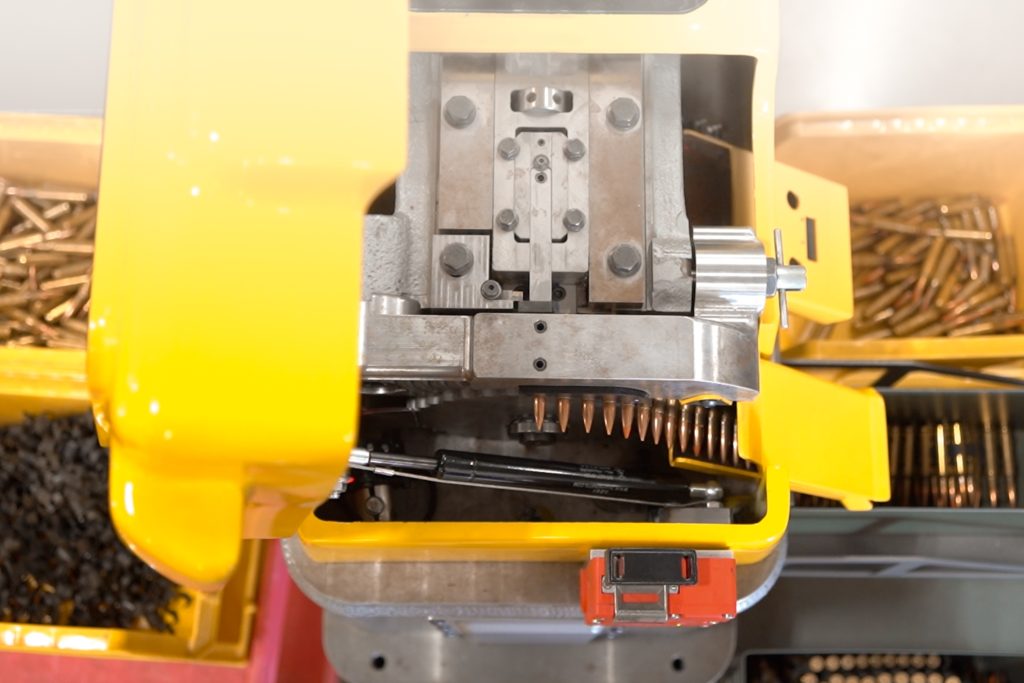
In modern ammunition manufacturing and packaging operations, linking and delinking are often viewed as secondary processes compared to case forming, projectile assembly, or loading. Yet in reality, these operations play a critical role in ensuring ammunition can be deployed, packaged, reconfigured, or demilitarized efficiently.
As global defense production demands continue to accelerate, manufacturers are increasingly discovering that these traditionally manual processes can become major operational bottlenecks. The industry’s shift toward automated linking and delinking systems reflects a broader movement toward leaner, faster, and more reliable ammunition handling.
A Brief History of Linked Ammunition
The concept of linked ammunition emerged alongside the development of belt-fed machine guns in the late 19th and early 20th centuries. Early machine gun systems commonly used cloth or fabric belts to hold cartridges together during feeding operations. While effective for the era, cloth belts introduced significant drawbacks, including moisture absorption, stretching, contamination, and inconsistent feeding reliability under harsh field conditions.
By World War II, metallic “disintegrating” links began replacing fabric belts across many military systems. The U.S. military’s M1 and later M13 metallic links became foundational to modern belt-fed weapons, as they separated from the ammunition during firing, improving feeding reliability while reducing weight and handling complexity. Modern NATO-standard links such as the M13 and M27 remain widely used today in systems chambered for 7.62×51mm NATO and 5.56×45mm NATO ammunition, and are specifically engineered to maintain controlled cartridge retention while enabling smooth push-through feeding under firing.
What Linking and Delinking Actually Involve
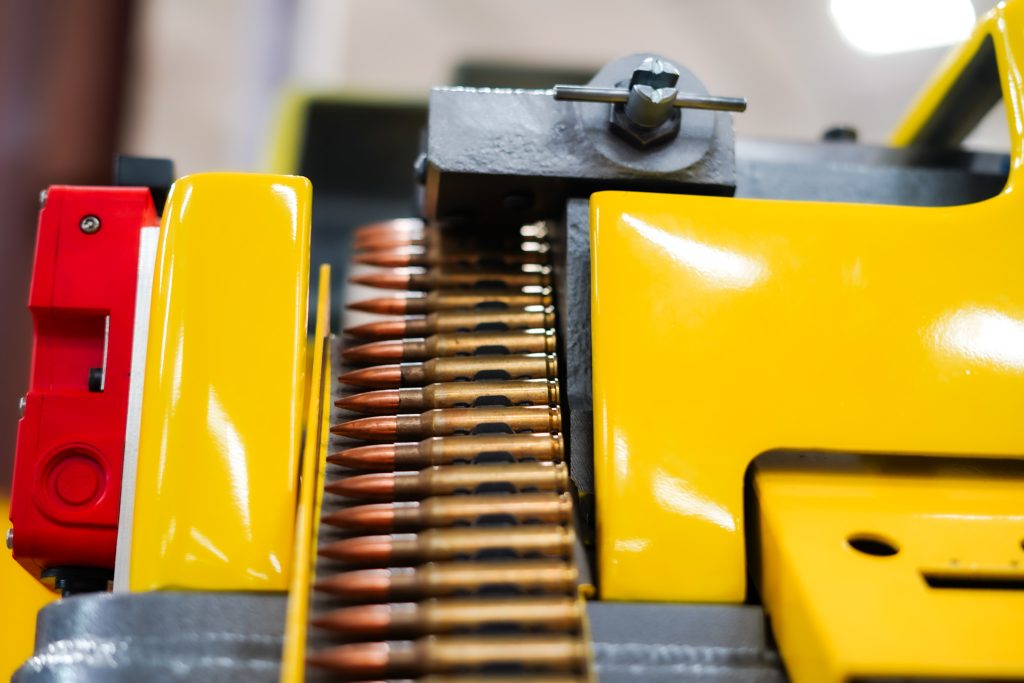
Linking is the process of mechanically assembling cartridges into metallic ammunition belts. This operation must ensure proper spacing, orientation, retention force, and alignment to guarantee reliable feeding performance once the ammunition is deployed.
Delinking is the reverse process: safely separating cartridges from linked belts. Delinking becomes necessary for several reasons, including:
- Ammunition inspection and quality control
- Repackaging and redistribution
- Tracer round separation
- Demilitarization programs
- Ammunition reconfiguration
- Inventory management and refurbishment
Historically, both processes have been heavily manual. Operators often assembled or separated ammunition by hand, particularly in facilities handling mixed lots, tracer configurations, or smaller production runs. While functional, manual linking and delinking introduces several operational challenges:
- High labor requirements
- Slower throughput
- Increased ergonomic strain on personnel
- Greater potential for cartridge damage or risk to personnel
- Inconsistent handling quality
- Production bottlenecks during surge demand periods
In many facilities, linking and delinking remains the most labor-intensive handling stages in the ammunition workflow.
Why Automation is Becoming Necessary
Modern ammunition production environments increasingly operate under compressed delivery schedules, fluctuating defense demand, and higher throughput expectations. In these conditions, even relatively small handling inefficiencies can create substantial downstream delays.
Manual linking and delinking may be manageable at low volumes, but under surge production conditions the process can quickly consume manpower and reduce operational flexibility. Facilities are therefore seeking automation solutions capable of improving consistency while reducing dependency on repetitive manual handling.
This is especially important in defense manufacturing environments where responsiveness matters. Whether supporting military readiness programs, urgent replenishment requirements, or accelerated production contracts, time lost during ammunition handling directly impacts delivery timelines.
The Bliss 3050LD: Modernizing a Traditionally Manual Process
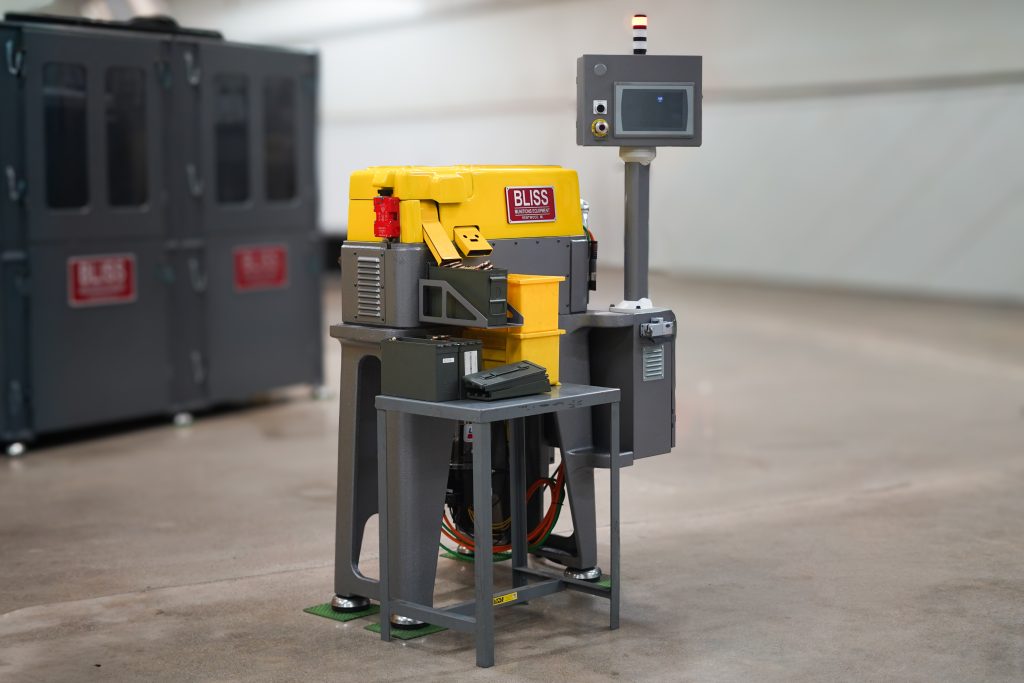
The Bliss 3050LD Linker and Delinker was developed specifically to address these challenges by transforming a historically time-consuming operation into a streamlined automated process.
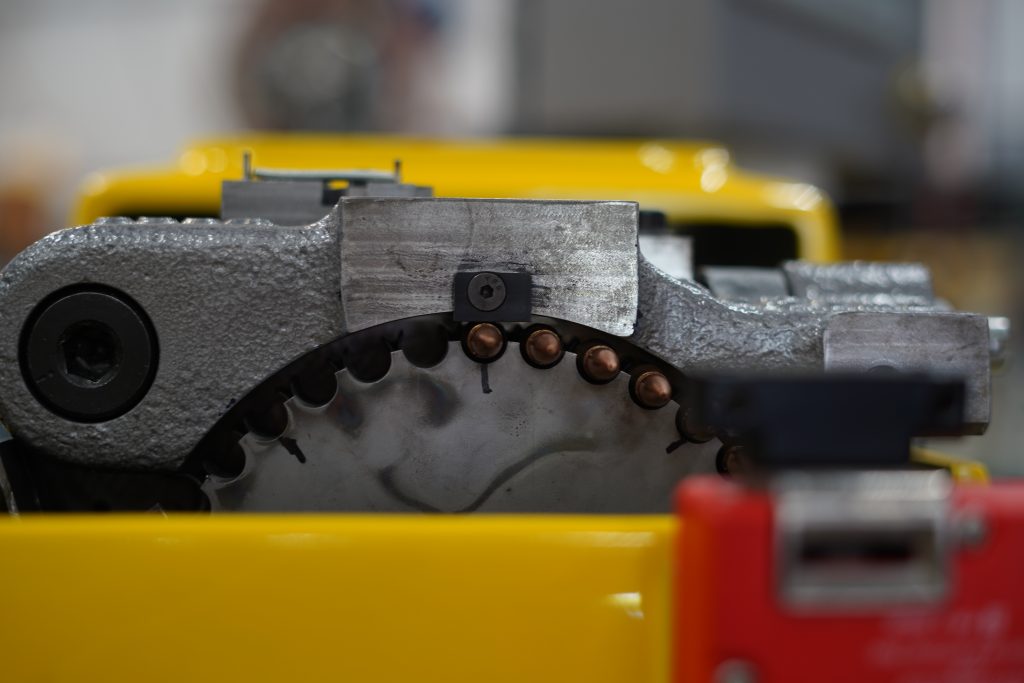
Unlike traditional setups requiring separate machines or extensive manual handling, the 3050LD combines both linking and delinking functionality into a compact, dual-purpose system. Supporting calibers up to 12.7mm, the 3050LD features a reversible setup capable of both linking and delinking operations within the same machine footprint. Its transition capability between processes eliminates the need for dedicated standalone systems, helping facilities maximize floor space and operational flexibility.
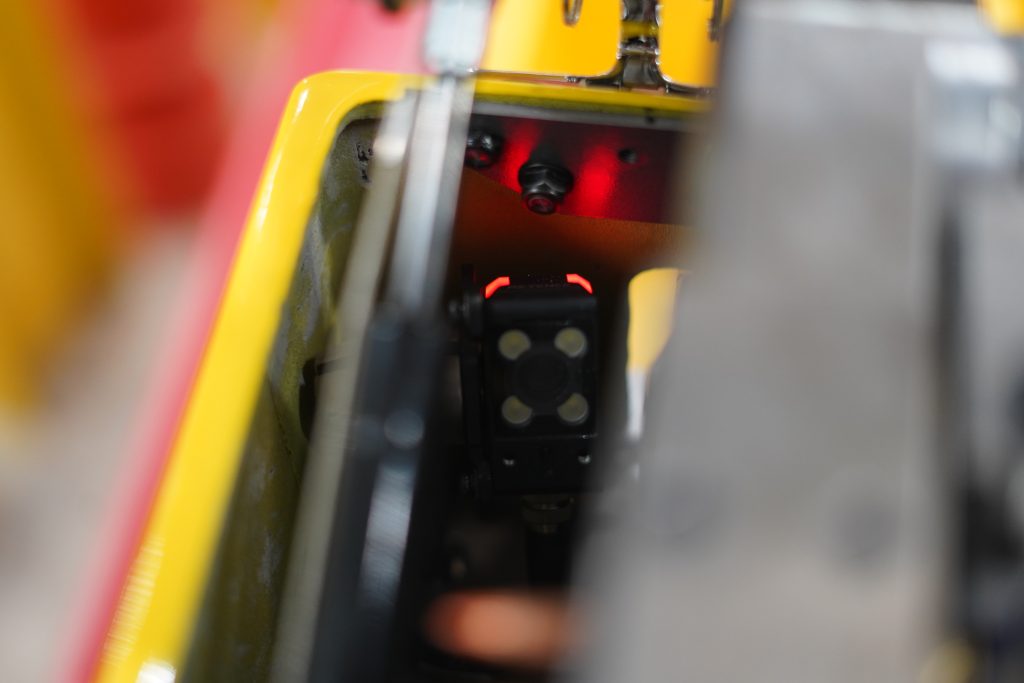
In addition to its compact footprint and ability to configure which operation it’ll be utilized for, the 3050LD’s integrated vision system for identifying and managing tracer separations is key in environments where tracer configuration accuracy is essential; automated identification reduces operator burden while improving repeatability.
Why It Matters in Time-Crunched Environments
The value of automation is often measured not simply in labor savings, but in operational responsiveness. In defense manufacturing, production schedules can shift rapidly due to geopolitical events, replenishment requirements, or accelerated procurement programs. Under these conditions, bottlenecks created by manual ammunition handling become far more significant.
A linking and delinking operation that once consumed multiple operators and extended processing time can instead become a predictable, repeatable automated workflow. That shift has several direct operational benefits:
- Faster ammunition processing
- Reduced labor dependency
- Improved production continuity
- More predictable throughput rates
- Reduced ergonomic strain on operators
- Faster reconfiguration between ammunition lots
In practical terms, automation allows skilled personnel to focus on higher-value manufacturing operations rather than repetitive manual handling tasks. For facilities balancing throughput, labor availability, and delivery timelines simultaneously, systems like the Bliss 3050LD represent more than convenience: they represent manufacturing resilience.
The Future of Ammunition Handling
As ammunition manufacturers continue modernizing production environments, automation is increasingly extending beyond primary manufacturing equipment into auxiliary handling operations. Linking and delinking, once viewed as unavoidable manual processes, are now becoming part of broader smart-manufacturing strategies focused on consistency, throughput, and operational agility. The Bliss 3050LD reflects that evolution: a compact system addressing a long-standing inefficiency within ammunition production workflows.
While linking and delinking may occupy only one stage of the ammunition lifecycle, improving that stage can have a large impact particularly when production speed, reliability, and responsiveness are critical.
In today’s defense manufacturing landscape, even the smallest operational bottlenecks matter. Eliminating them may be the difference between meeting demand and falling behind.